The enterprise brands that captured the most incremental revenue in 2025 were not the ones that perfected their Amazon strategy, or refined their Shopify conversion rate, or optimised their Meta campaigns. They were the brands that expanded to 6 or more global marketplaces in parallel — and built the operational architecture to manage them as a unified system rather than as 6 independent businesses. Forrester's 2025 Global Commerce Index found that brands operating across 6+ marketplaces generated 2.8× more incremental revenue than brands expanding one market at a time, with 40% lower per-market launch cost due to shared infrastructure amortisation.
The conventional wisdom — expand to one new market, learn, then expand to the next — is demonstrably suboptimal. Sequentially launched marketplaces compound launch costs without compounding returns. Parallel expansion, built on shared compliance infrastructure, localised content systems, and centralised inventory management, achieves the revenue benefits of each market without bearing the full launch cost of each independently.
The Six-Marketplace Priority Stack
Not all marketplace expansions are equal in ROI or operational complexity. The priority stack for most North American ecommerce brands begins with three foundational expansions that share language, payment infrastructure, and Prime fulfilment networks, then extends to the EU cluster where shared VAT registration and FBA European Fulfilment Network (EFN) logistics create meaningful operational leverage.
Tier 1: Amazon US + UK + Canada
These three markets share the English language (reducing localisation cost by 70–80%), compatible Amazon seller account structures (a North America Unified Account covers US + Canada simultaneously), and similar compliance requirements. Amazon UK requires a separate European seller account but benefits from the same core listing content with minor adjustments for British English spelling and UK-specific regulatory compliance labelling. Launch all three simultaneously rather than sequentially — the marginal cost of adding Canada and UK to a US launch is 15–25% of the cost of launching them independently.
Tier 2: Amazon EU Cluster (DE, FR, IT, ES)
The Amazon EU cluster is managed through Amazon's European Fulfilment Network — a single inventory inbound to one EFN warehouse enables same-day inventory availability on all four EU marketplaces simultaneously. The key operational requirement is VAT registration in each market where you store inventory. Enrol in Amazon's VAT Services programme (covers Germany, France, Italy, Spain, Poland, and Czech Republic) to automate filing and payment, reducing compliance overhead from 40+ hours per market per quarter to a monthly platform fee.
Localisation is non-negotiable for EU performance: listings translated by professional ecommerce translators (not machine translation) with native-language category knowledge routinely outperform English-only listings by 35–60% in conversion rate. The translation investment per market typically ranges from $500–$1,500 for a standard 50-ASIN catalog — a cost that pays back within the first 30 days of meaningful sales volume in any mid-sized category.
Tier 3: Walmart Marketplace + Etsy (Specialty Expansion)
Walmart Marketplace is an increasingly important channel for brands with broad consumer appeal — particularly in health, home, beauty, and outdoor categories where Walmart's 120M+ monthly unique visitors represent addressable demand that Amazon and Shopify alone do not fully capture. Etsy remains the dominant platform for handmade, vintage, and artisan product categories, with 90M+ active buyers and lower competitive density than Amazon in eligible categories.
The Centralised Inventory Architecture for Multi-Market Operations
Inventory Pooling Strategy
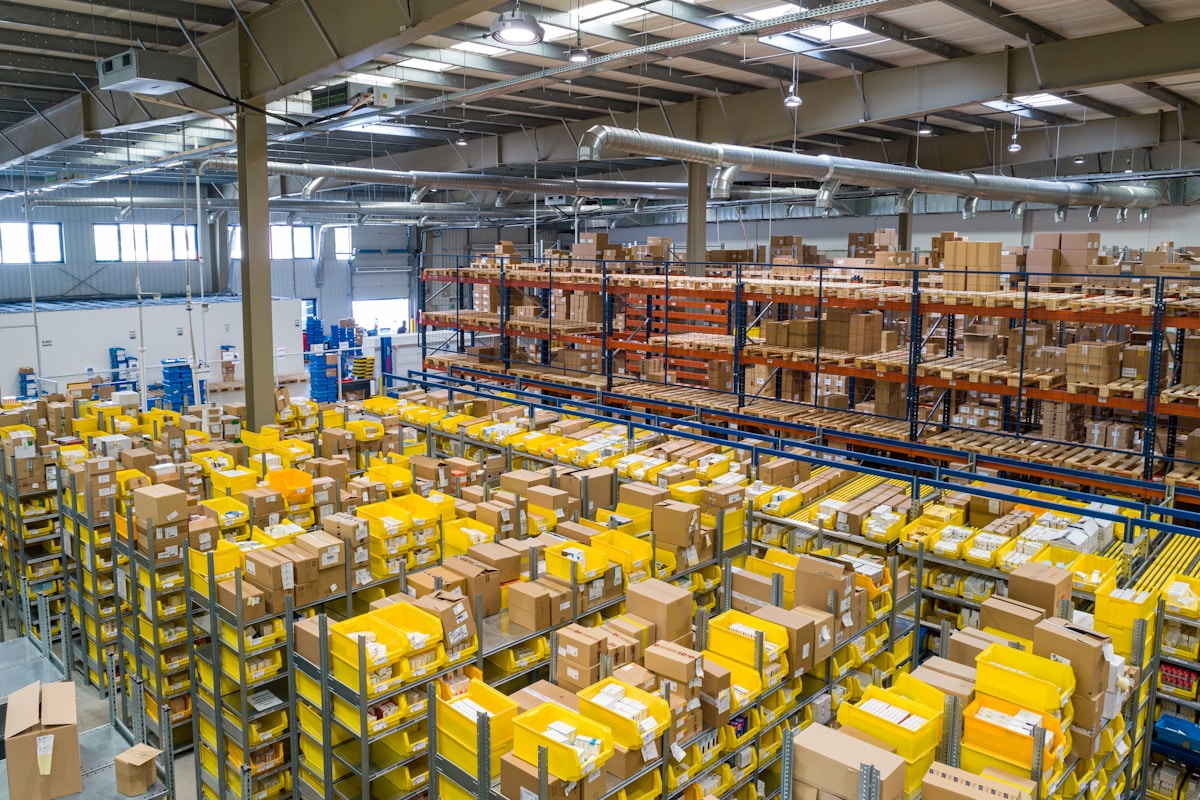
Running inventory across 6+ marketplaces without a centralised inventory management system is operationally unsustainable above $500K annual revenue. The correct architecture is a centralised inventory pool — either through Amazon's European Fulfilment Network for EU markets and FBA for North America, or through a 3PL with multi-channel fulfilment capability — with dynamic allocation rules that distribute available inventory based on sell-through velocity per market, seasonal demand patterns, and restocking lead times.
Compliance and Labelling Automation
Each market has distinct regulatory labelling requirements: CE marking for EU electronics, REACH compliance for cosmetics, specific ingredient declaration formats for food products, and import compliance documentation that varies by product category and destination. Building a compliance database that maps each product SKU to its per-market labelling requirements, and automating the generation of market-specific compliance documentation, reduces the ongoing compliance management burden from a full-time resource to a part-time operational function.
The 90-day launch sequence: Week 1–2: account setup and VAT registration initiation. Week 2–4: inventory compliance review and market-specific labelling production. Week 3–6: listing translation and marketplace content creation. Week 5–8: initial FBA inbounds to each market's fulfilment network. Week 7–10: PPC campaign activation and launch promotions. Week 10–12: performance review and inventory rebalancing based on first-month sell-through data.
Frequently Asked Questions
Parallel expansion amortises infrastructure costs — compliance systems, translation workflows, 3PL relationships, VAT registration processes — across all markets simultaneously. Sequential expansion bears the full infrastructure cost for each market independently. Forrester data shows parallel expansion produces 2.8× more incremental revenue at 12 months with 40% lower per-market launch cost.
For parallel expansion across 6 markets, allocate a minimum of 3 months of projected sell-through per market for initial FBA inbounds, plus a 20% buffer for launch velocity variance. Inventory pooling through a centralised 3PL or Amazon EFN reduces total capital commitment by 30–40% compared to pre-allocating separate inventory per market independently.
Enrol in Amazon's VAT Services programme, which covers Germany, France, Italy, Spain, Poland, and Czech Republic with automated filing and payment. For the UK, HMRC VAT registration is mandatory for brands above £70,000 in UK revenue. Both programmes reduce compliance overhead from 40+ manual hours per market per quarter to a monthly platform fee with automated calculation and filing.